










By Mr. Rishi Chhabria, Founder & Managing Director, Aéromé
The moment we step into an airport, our bodies respond instinctively. Shoulders tense. Breathing becomes shallow. The mind shifts into a state of alertness.
Airports are built for efficiency and by nature, they are among the most stressful environments we navigate. Time pressure, unfamiliar surroundings, constant movement, and heightened security all contribute to sensory overload. And yet, across the world, many airports today feel noticeably calmer than they once did.
The shift is subtle. Often invisible. But deeply felt.
Scent our most instinctive sense is quietly reshaping how we experience high-stress environments. Unlike sight or sound, fragrance bypasses conscious processing and reaches the emotional centre of the brain directly. Within seconds, it can influence mood, memory, and stress responses. This makes scent uniquely powerful in spaces where people feel rushed, uncertain or overwhelmed.
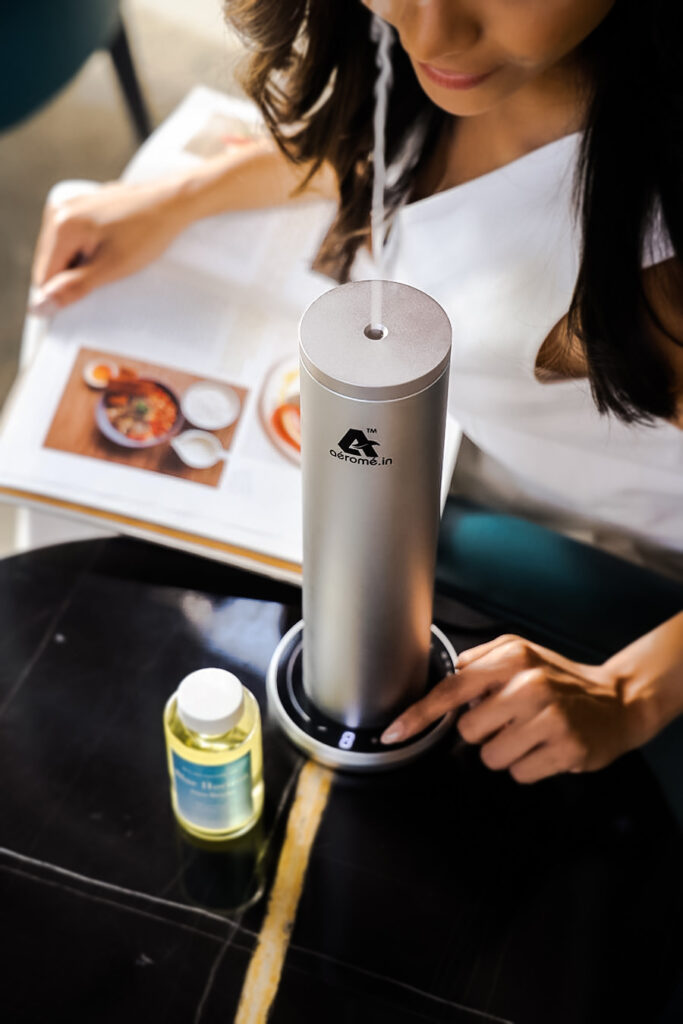
At Aéromé, this understanding has shaped how we approach scent design for complex public spaces such as Bangalore International Airport (T2). The objective is never to mask odours or “perfume” the environment. Instead, fragrance is used as a psychological tool carefully calibrated to reduce fatigue, ease anxiety, and create a sense of orientation within a highly transient space.
Fresh citrus and green notes help counter mental drowsiness and travel fatigue, while woody and musky accords ground the senses, offering a feeling of stability and reassurance. Most travellers never consciously notice the fragrance, but they feel the difference. Queues feel shorter. Spaces feel safer. Transitions feel smoother. The calm is subconscious, yet remarkably effective.
Hotels, however, require a different emotional approach. Guests arrive carrying the residue of travel , noise, time constraints, fatigue, and stimulation. A carefully curated fragrance in a hotel lobby or guest room signals arrival. It gently tells the body: you can slow down now.
Luxury hospitality brands such as Taj Hotels have long understood that true comfort extends beyond visual elegance or service excellence. Scent becomes an invisible signature one that quietly reinforces warmth, familiarity, and belonging. Over time, hotels have learned an important truth: guests may forget how a room looked but they rarely forget how a place made them feel.

A signature fragrance transforms a stay into an emotional experience. It builds memory, deepens brand recall and often becomes the unspoken reason a guest chooses to return.
What airports and hotels are ultimately teaching us is that well-being is not driven by amenities or technology alone. It is sensory. It is emotional. It is deeply human.
As modern life grows louder and faster, people are seeking environments that soothe rather than stimulate. Scent, when used consciously, creates that balance working quietly, intuitively, and powerfully in the background.
This marks an important evolution for the fragrance industry. Smell is no longer decorative; it is functional. It is strategic. Designing fragrance for public spaces requires a nuanced understanding of psychology, cultural context and emotional behaviour. A scent that works in a spa will not serve an airport. A hotel lobby fragrance must operate very differently from one designed for retail or hospitality dining.
When used responsibly, scent can reduce stress, uplift mood, enhance focus, and foster a sense of belonging even in the most transient environments.
The future of well-being will not be loud or obvious.It will live in the details. And increasingly, it will be shaped by what we feel before we even realise it.










[…] Can Scent Reduce Stress? What Airports and Hotels Are Teaching Us About Well-Being […]
[…] Can Scent Reduce Stress? What Airports and Hotels Are Teaching Us About Well-Being […]