





It’s 3:40 AM, while the rest of the world still slumbers under the weight of dreams, Bengal awakens. Not to alarms or the bustle of daily life but to the solemn, spine-tingling sound of Birendra Krishna Bhadra’s voice soaring through the airwaves, reciting the Chandipath.
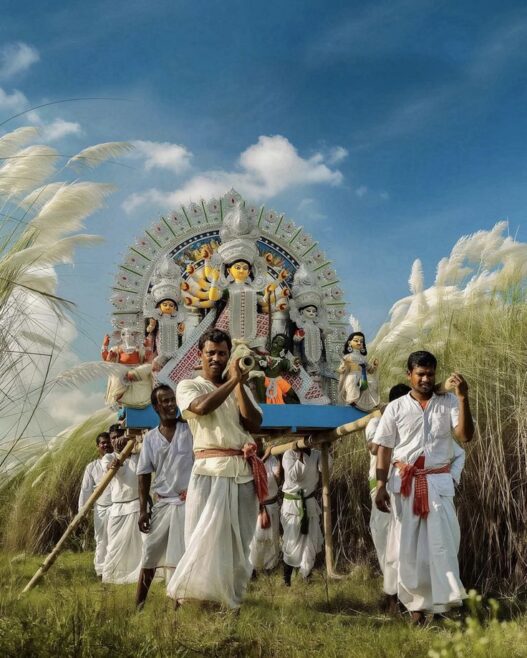
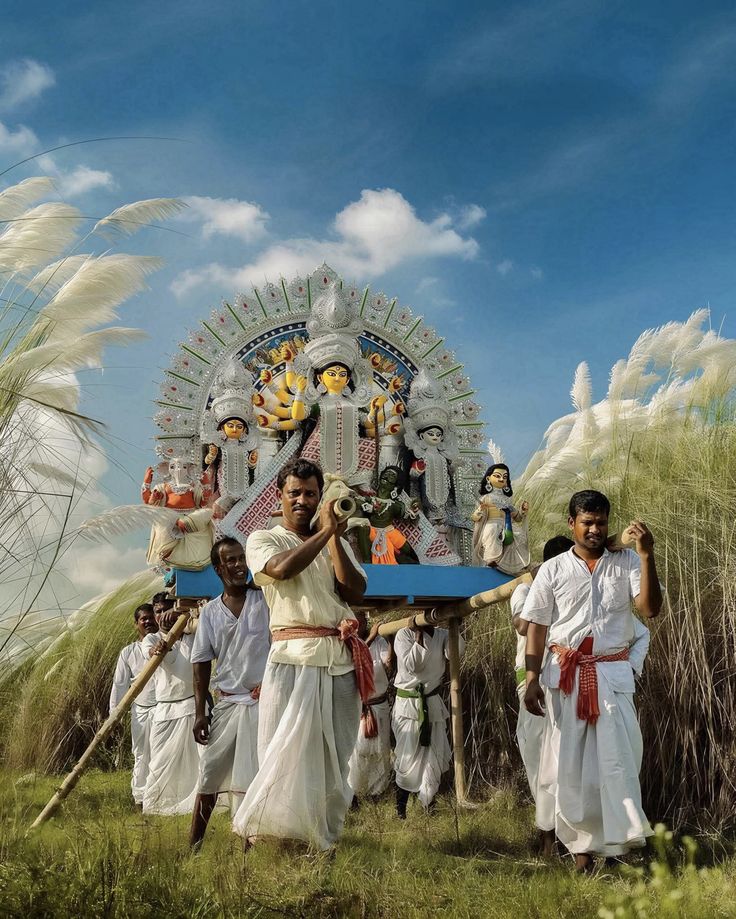
This is Mahalaya not just a date on the calendar, but a spiritual doorway. A threshold where time pauses, myths come alive, and the earth prepares to welcome the mother Durga in all her blazing glory.
Mahalaya marks the beginning of Devi Paksha, the fortnight when the divine feminine rises to restore cosmic balance. It comes after Pitru Paksha, the time meant for honoring our ancestors as if the souls of the departed hand over the earth to the goddess herself.
In mythology, Mahalaya is the day when Durga is summoned to descend to earth to vanquish evil, to battle the demon Mahishasura a metaphor for all the darkness we carry in our collective consciousness.
But for Bengalis, Mahalaya isn’t just mythology. It’s memory, culture, and emotion stitched tightly into the fabric of who they are.
It begins in the dark. Homes light up long before sunrise. Radios crackle to life. In Kolkata and across Bengal, thousands still tune into the iconic 90-minute radio program Mahisasura Mardini, first aired in 1931. No matter how modern the times, Mahalaya demands this one act of devotion: to listen, quietly, together. It is not a performance , it’s a ritual.
The Ritual of Chokkhu Daan
While the people pray and listen, artists in Kumartuli the potters’ quarter of Kolkata prepare for the most sacred act of all: Chokkhu Daan, the painting of the eyes on Durga idols.
Until now, the goddess is a silent sculpture. But on Mahalaya, her eyes are drawn carefully, reverently and in that moment, it is believed she truly arrives. It is not just clay anymore. She has vision. She sees.
Artists often fast or bathe in the Ganges before this act. For them, it is not craftsmanship. It is communion.
Mahalaya doesn’t mark celebration it marks anticipation. It’s the heartbeat before the dance, the breath before the song. It tells us: the Goddess is on her way.
For every Bengali, no matter where in the world they live, Mahalaya is the invisible thread that tugs at their soul. It’s the call of the home, the smell of shiuli flowers at dawn, the rustle of new sarees folded for the first day of puja.
The streets begin to buzz. Pujo pandals are readied. Drummers test their beats. And somewhere in Kumartuli, the eyes of the goddess look out for the first time not with wrath, but with the fierce, quiet love of a mother coming home.
READ MORE: Dandiya Plans Yet? Here Are the Hottest Navratri Events in Delhi-NCR & Mumbai!