







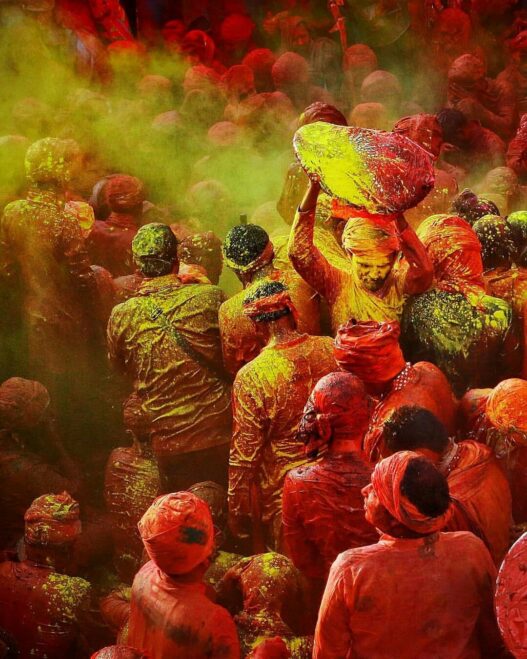
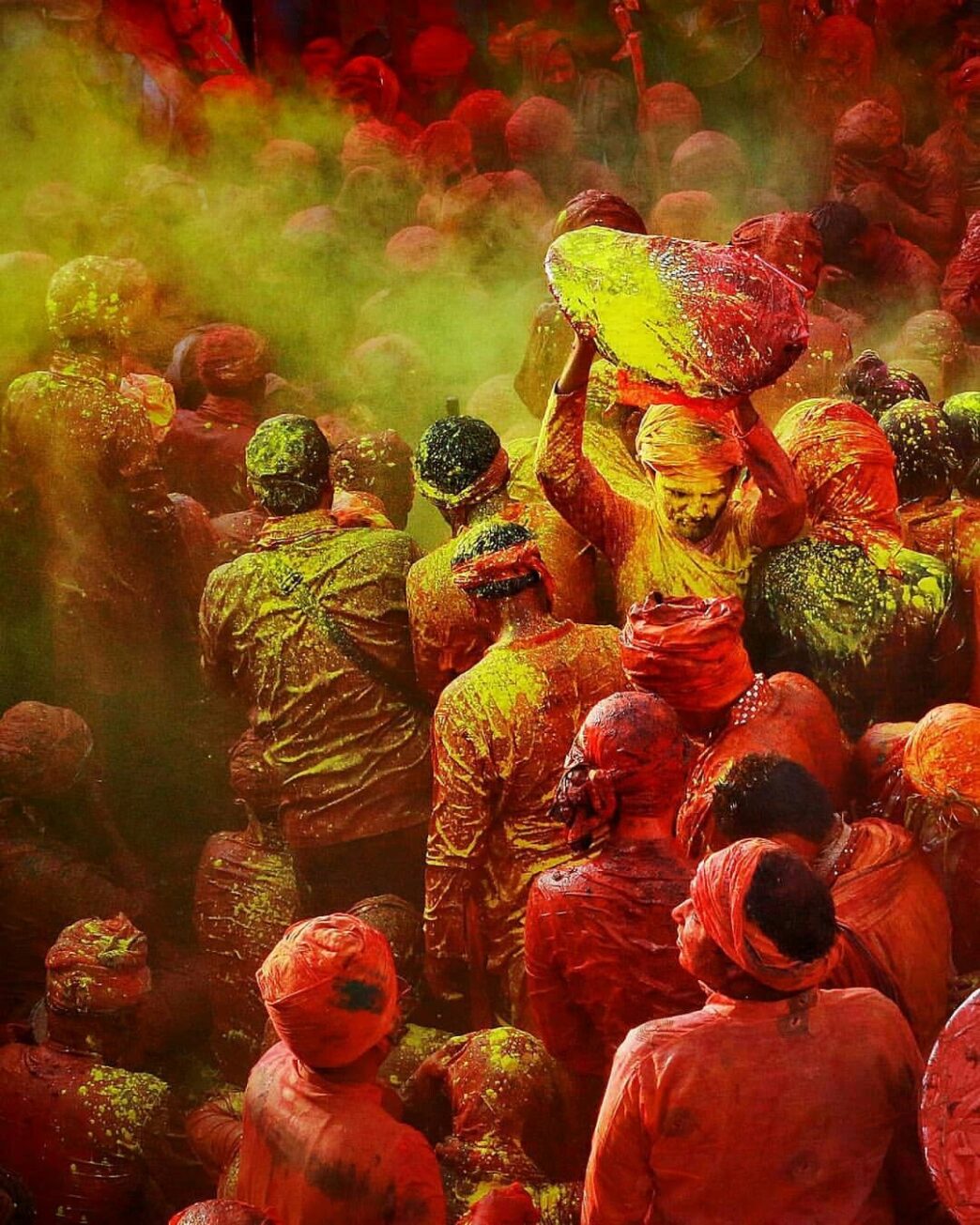
Holi may be marketed globally as India’s “festival of colours,” but on the ground, it is far more complex. In some cities, it begins at cremation pyres. In others, it unfolds inside palace courtyards with ceremonial cannons. In temple towns, it stretches across weeks in devotional crescendo.
For travellers in 2026 seeking more than commercial colour parties, India’s most compelling Holi stories lie in places where myth, mortality, monarchy, and mass tourism collide. Here’s where to go and why these celebrations matter.
Varanasi
In Varanasi, Holi does not shy away from mortality. Days before the main celebration, sadhus gather at Manikarnika and Harishchandra ghats for what is widely known as Masaan Holi.
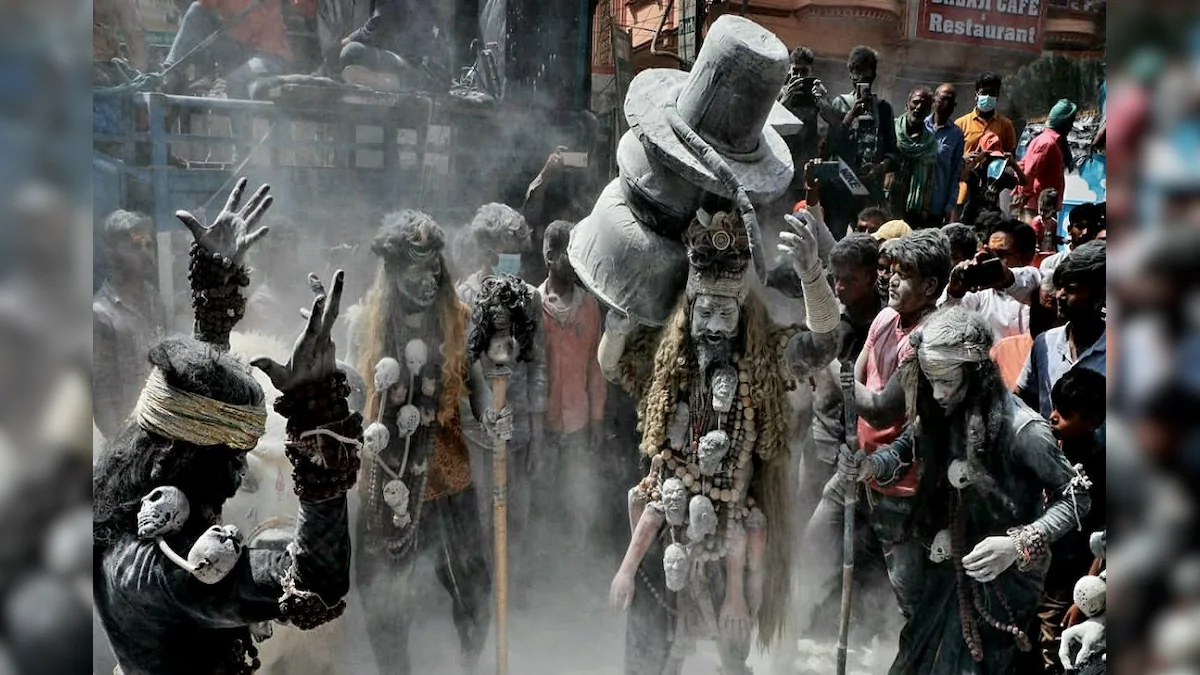
Instead of bright powders, ash from funeral pyres is smeared across faces. The symbolism is deeply Shaivite Lord Shiva, the ascetic god associated with cremation grounds, represents destruction and rebirth. In a city where death is believed to grant liberation, Holi becomes a meditation on impermanence.
By the time the official festival day arrives, the ghats erupt into a contrasting spectacle of colour, music, and unfiltered abandon.
Few festivals in the world juxtapose cremation rituals with celebration. For cultural observers, Masaan Holi is both visually arresting and philosophically profound.
Mathura & Vrindavan
In the twin temple towns of Mathura and Vrindavan, Holi is not confined to a single day it unfolds over nearly two weeks.
These towns are intrinsically linked to Lord Krishna’s childhood legends. The festival commemorates his playful colouring of Radha and the gopis, transforming mythology into public theatre. At the revered Banke Bihari Temple, priests shower devotees with petals during Phoolon wali Holi, creating a fragrant alternative to powdered colour.
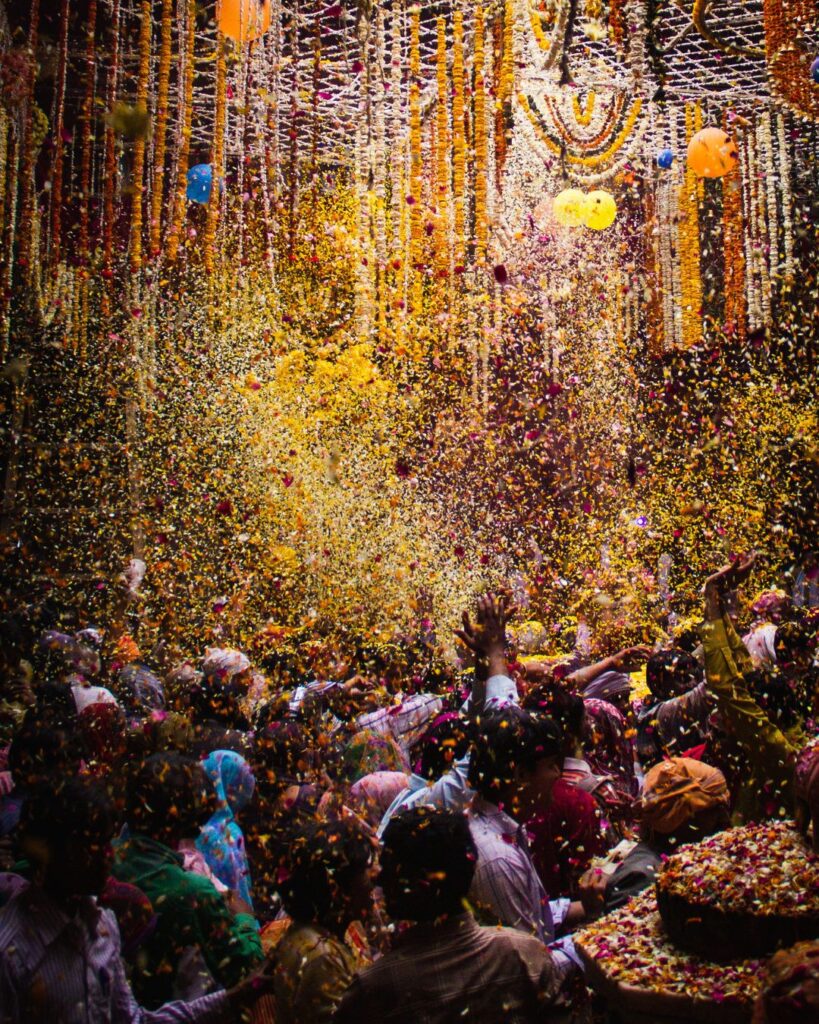
Widow Holi celebrations once unthinkable in orthodox society have also emerged here in recent years, marking a subtle but significant social shift.
Mathura-Vrindavan has become the epicentre of religious tourism during Holi, drawing both pilgrims and international travellers. The scale is massive, the security tight, and the rituals centuries old.
Barsana & Nandgaon
In Barsana and neighbouring Nandgaon, Holi turns into a dramatic re-enactment known as Lathmar Holi.
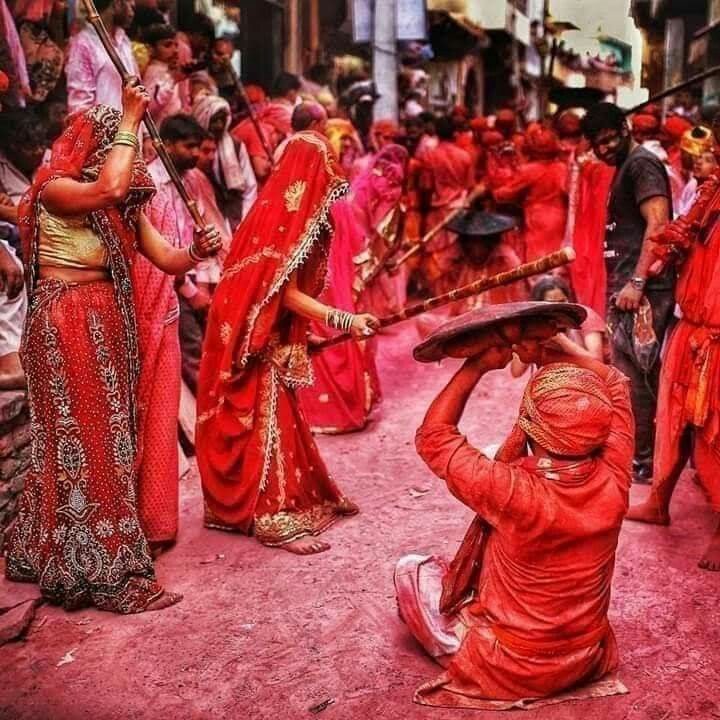
Legend says Krishna visited Radha’s village and teased her companions. The women chased him away with sticks. Today, men from Nandgaon arrive in Barsana only to be symbolically “beaten” by women wielding long wooden staffs, while shields are raised in mock defence.
Beyond spectacle, Lathmar Holi is a ritualised inversion of gender power one that has survived commercialization and continues to fuel regional tourism.
Udaipur
In Udaipur, Holi is infused with Rajput grandeur. At the City Palace, the erstwhile Mewar royal family presides over ceremonies beginning with Holika Dahan, symbolising the triumph of good over evil.
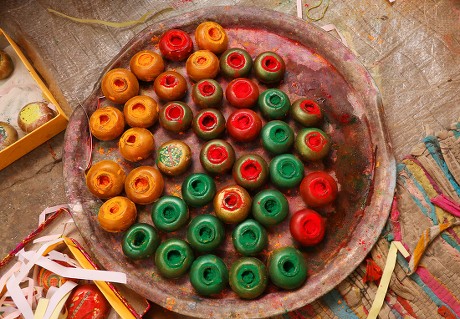
But the lesser-known highlight is Gulal Gota a historic practice where coloured powder was packed into small balls or launched through decorative cannons within palace courtyards. Unlike modern water balloons, these bursts created clouds of dry pigment, turning warfare aesthetics into festive choreography.
Gulal Gota reflects how Rajasthan’s warrior courts adapted a folk festival into a regal spectacle. Here, colour is not thrown casually it is deployed with ceremony.
Pushkar
The desert town of Pushkar presents a different Holi narrative one that balances devotion and global tourism.
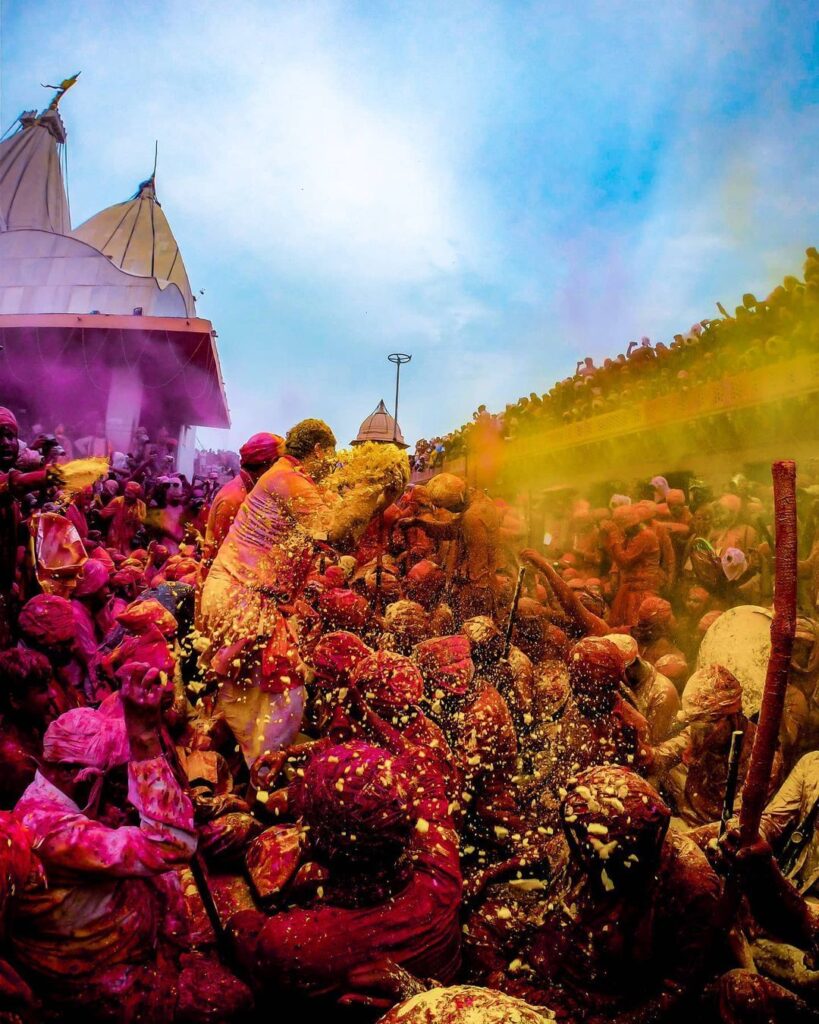
Centered around the sacred Pushkar Lake and the rare Brahma Temple, the day begins with temple rituals. By afternoon, the main square becomes a surge of colour and music, drawing backpackers, domestic travellers, and locals into the same exuberant space.
Pushkar’s Holi has become a visual staple in international travel photography vibrant, chaotic, almost cinematic.
The town embodies Holi’s evolving identity where ancient pilgrimage routes intersect with modern festival tourism.
Holi in India is not a monolith. It is devotional in Mathura, confrontational in Barsana, royal in Udaipur, existential in Varanasi, and globally staged in Pushkar. Each city tells a different story about power, faith, mortality, and renewal.
For travellers willing to move beyond curated “Holi parties,” these destinations offer something rarer: participation in traditions that are still evolving, still contested, and still intensely alive.
Because in India, Holi is not just played. It is performed differently, defiantly, and dramatically across every landscape it touches.
READ MORE: A Conversation with Shivani Nirupam on Why Prints Are the Future of Indian Bridal Fashion




[…] READ MORE: Holi 2026: Where to Travel for India’s Most Authentic Celebrations […]
[…] READ MORE: Holi 2026: Where to Travel for India’s Most Authentic Celebrations […]